"What sets us apart from the competition is simply our ability to be a bespoke agency, offering true quality in project support, comprehensive service, and genuine expertise in digital."
What exactly does SPOA do?
SPOA is a hybrid communication agency that integrates, on the one hand, the design, creation, and strategy aspects from a communication standpoint and, on the other hand, produces high-quality content across all assets we can produce during campaigns. Our specificity lies in personalized support for advertisers or even other agencies that create but come to us for pure production. We have expertise in three sectors: luxury, corporate, and entertainment.
Where does SPOA come from?
We were an audiovisual production company almost 13 years ago. For the story, I struggled to find a name, and my grandfather, who just turned 99, suggested the name "audiovisual works production company". It was a bit too long! So, we kept the initials but changed the meaning to "Super Production and Original Agency", representing our activity that combines creation and production agency work. Since then, we've evolved through several stages. We've supported digital transformations and the advent of video on social networks. Initially, it was 15-second videos. We focused on understanding what social networks were and this new communication was emerging.
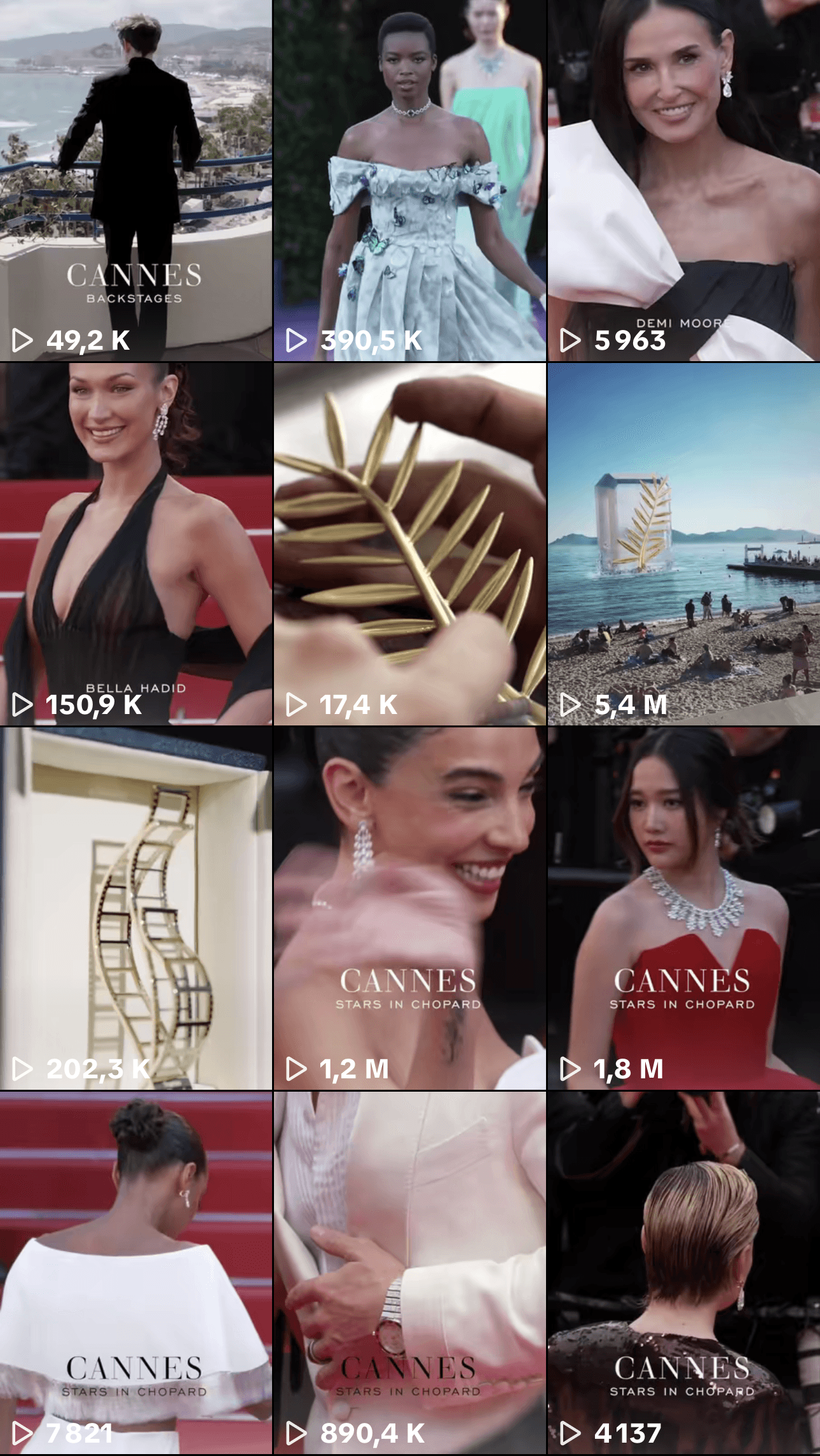
Within a few months, we began to be consulted by luxury brands during events like the Cannes Film Festival, who wanted to optimize their communication during this highly publicized event, which was still at the forefront of what happens today on Instagram. We were among the first to create storytelling mini-content on this social network. These were short videos, and we had real success with a high jewelry brand and the model Bella Hadid.
There was her famous ascent of the steps in a red dress. We organized it with the partner brand de Grisogono and created viral content that was broadcast and rebroadcast. The success was such that we experienced an "Internet break" due to a viral and purely organic overload of content spread for a few hours during the Cannes Festival. This event led us to ponder creating short content with high added value. It's not because we're on social media that we should make low-quality things. Since then, we haven't stopped, except now all social media have turned to video. There are even social networks built around video. For some time, we've been working on TikTok, for example.
We enjoy playing and creating innovative and unique things on these platforms. We are content creators and experience creators on social media through video and musical creation.
Returning to our history, we've continued, and brands have spontaneously asked us to work with them. We've directly collaborated with brands that actually needed genuine premium expertise. We try to remain in the premium sector, whether in luxury, with Lacoste, Cartier, for example. But we also create content for other advertisers like Renault, campaigns for Disney with major influencers like Chiara Ferragni, and each time, they're unique, agile experiences, very crucial for our positioning. That's what also constitutes our model.
How does the company stand out?
What is interesting, in fact, in our model is the "boutique agency" aspect. Nowadays, we tend to think digitalization is global. We constantly transmit on all channels. However, we work on customized communication or project operations to have optimal effects across all communication campaigns, whether corporate, like for the announcement of an acquisition, notably during a statement like Bernard Arnault's to announce the purchase of Tiffany or when talking about the trades that form the LVMH group brands or whether it is marketing.
We always seek content and campaigns or strategies that will allow us to stand out in our approach, aiming only for the format to reach the target, and this applies in both senses of the term. Impact from a targeting perspective and touch from an emotional perspective. It's necessary to seek formats that are inspiring and bring storytelling. In conclusion, what sets us apart from the competition is simply our ability to be an agency that works on custom projects, offering genuine quality in project support, global service, and real expertise in digital.
Has digitalization become particularly important to you, especially since COVID?
Obviously. It's a real revolution created during this crisis. Crises allow for revolutions and also highlight opportunities. These have led to increased awareness of the ecological aspect and boosted many interesting actions in the world we live in. For example, the arrival of electric and all-electric vehicles. This crisis allowed the earth to rest for a while with successive lockdowns. We have seen very negative effects that should not be forgotten.
In any case, regarding digitalization, it has forced the digital transformation of brands, especially for companies that were slow to go digital, particularly concerning teleworking. The crisis enabled the equipping of employees, allowing them more agility and autonomy. And that is a very good thing. It has freed the classic side of the work and provided more confidence and freedom in work.
Were you affected by the crisis?
Among our clients during the crisis, there were a multitude of projects we were working on that remained on standby. There were events we were working on at that time, for example, for Sotheby's and LVMH, which are among our main clients. Nothing was happening, so during those months, we had to reinvent events, digitalize them, and think differently. Digitalize, of course, but with human concerns at the center. We worked a lot on research and development and made interactive live stream recordings. We also had to develop content that motivated employees.
For some time, we've been working with AXA, and we've set up an internal social network for employees through internal communication software like Teams. We developed a complete content strategy for the 7,000 employees to provide them with a kind of digital entertainment.
For example, we created a Spotify playlist. Team members could vote on their favorite tracks. We call it Feel Good Factor, and the operation is called Connect and Smile. It's the pinnacle of internal communication. Then we created a second activity with yoga classes and a whole visual universe to attract employees and encourage them to participate, giving meaning and connecting around these activations. It is ongoing and ultimately, it was the crisis that allowed us to initiate these activities and digitalize work.
Have new formats emerged since the crisis?
We support Sotheby's, which belongs to the Iliad group, a French group, conducting exceptional sales. We had to transform auctions held in various countries: they are located in New York, London, Paris, Hong Kong, etc., with sales like Van Gogh, as well as private collections, notably like the Yves Saint Laurent collection of Pierre Bergé on which we have worked.
For Van Gogh's exceptional sale, we had to recreate an event that was physical until the crisis into a remote event, with people wanting to buy exceptional products worth several million euros. We had to reinvent it digitally, and so we created it in collaboration with partners and Sotheby's. We recreated a television set with incoming and outgoing streams to collect streams from London, New York, Hong Kong with different bidders in various countries.
We had in Paris the auctioneer who organized the live stream sale, and thus we reinvented auction sales with the market leader in the sector.
How is your activity structured?
In our business, we have different types of collaborators. We have the design, creation, strategy part, which is intellectual work based on various client issues. We have the production part where we must implement approved strategies and communication plans with content production, whether photos or videos, graphics, etc., or TV campaigns or TV shows, etc. Then we have the post-production, carried out in editing rooms we decided to integrate into the Agency because it allows for real control over the image since we do not outsource post-production. Finally, there is the advertising part to disseminate content across different channels.
How has digitalization changed your activity?
At the time of the crisis, we had to, at one point, disconnect everything from the physical agency. We equipped our teams with computers. We moved editing stations to different collaborators via Zoom, allowing us to continue our work. Today, we have largely returned to the agency because there was a desire among teams to work together, albeit with stricter health measures. We have a kind of rotation and have prioritized teleworking, which allows us not to lose efficiency.
We have expanded our teams with people working externally because there is no need for face-to-face work on certain projects. As such, we had to hire about thirty people for an operation of the group. The advantage is that with these people, we could start a project overnight because we could still meet clients without physically traveling via Zoom, and thus we gained efficiency.
Will you continue working remotely or more in the agency? What's your plan?
Social connection is essential, whether with collaborators or clients. It's important to maintain it and to meet regularly. Yesterday, we welcomed a major health actor who wishes to leave his large agency and work with a smaller, more agile agency like ours and who came to meet us. He needed to see us, so we can't fully digitalize everything. But I know the subsequent exchanges will be done via Zoom. Certainly, we will continue, but we will take the best of each way of working.
Have there been major evolutions?
The 5G has arrived, and it will multiply the number of videos, the video bandwidth. I believe today, it's no longer possible to create content without using video. But the real question lies in the quality, the format. Clients who come to us need to diversify and stand out in various formats. To return to a specific example, our client LVMH entrusted us with creating a format that showcased the group's trades, and we thought about the best way to operate by combining meaning and connection.
We thus created an original digital series called The Doers. Each episode of the series showcases, values a talent from the LVMH group. Thus, for the first episode, a director at Louis Vuitton. The second, an oenologist at Ruinart, and the third episode with Nona Source, which was released recently "in great style" because it is an innovative group service for recycling raw materials from the group's major brands. The mission we had was to create a format optimal for social networks.
How does it work concretely?
We designed this format for omnichannel exploitation on different platforms with real development on the LinkedIn platform for several months with video formats. Currently, we are working for the contents to live on this professional social network to become a real source of information for careers and recruitment, but also consequently for Instagram, a platform primarily for entertainment using different formats. We adapt it in vertical, square, 16:9, long version, short version, simply to be the best content and best format broadcast on the best platform to achieve the best possible reach and to touch the targeted individuals. Actually, we met with real success, and the press has resumed the latest episodes of The Doers by Nona Source.
We also had the pleasure of supporting the book release of Philippe Manœuvre during the pandemic and confinement. He was supposed to release a book on the 200 greatest cult Vinyls published by Desinge & Hugo & Cie. Philippe Manœuvre came to us saying he was facing an issue with the confinement and couldn't conduct the usual promotion and book signings in FNAC, etc. He was completely blocked as he couldn't do book signings for the promotion.
We conceived together a digital Instagram TikTok series called "Plan Culte," which became a daily program. Every day, a one-minute snippet was broadcast on the social media of the publisher, and therefore on Instagram and TikTok, to name the social networks. It was a hit, meaning it boosted sales without any media purchase. It's purely organic. He sold over ten thousand copies of the book during that period, which is an exceptional figure for a book.
SEA, SEO for SPOA?
In all our campaigns and projects, our specialization is precisely to avoid our clients overpricing their campaigns. We avoid to the maximum inventing strategies for them that require a significant investment in SEA. Because simply, as I mentioned, our strength is virality, it's organic growth. Now, there are certain strategies that do indeed require this kind of approach, but they are more integrated into strategies for very general public sales. Our real strength is our creative and strategic content expertise. When there's a need for a client to work on these referencing, keyword purchase topics, etc., we collaborate with partners or people who join us.
What is your current challenge?
We are currently experiencing a real challenge. The agency is restructuring because 2021 has already started with a bang with a renewal in content. Today, we are in a logic of consistently providing and refining a tailor-made reflection. Consequently, we want to prepare for the next 5, 10 years, and this, this year. It's the year to differentiate campaigns and content to make brands emerge. We can't do what the neighbor does, and we are working a lot within the agency on storytelling, on new communication formats on what will exist tomorrow. We are going to talk about digital series, formats, inspiring formats, recurring ones in which brands can evolve.
I also strongly believe in brand documentaries, especially in recounting their history. We are talking about things that support not just an advertisement but delve into the often fascinating history of brands because they bring storytelling, but also know-how. We have very beautiful companies in France, and we are fortunate to have leaders in luxury. Also, we know why because we have exceptional products, a capacity for exclusive products but also of excellent quality.
These are very exciting topics on which we want to work on formats with high added value and meaning, all while having the freedom to adapt them to different platforms. So, for me, in terms of content, we are adopting an approach of content with meaning and desirability in the stories we will tell.
Adding meaning, yes, but practically?
We are going to tell real stories of documentaries or fiction that will be well-written. For example, for The Doers, we spent several days, several weeks writing the episodes. We didn't just go on set; we produce the shoot ourselves, and we exchanged on the trades. We conduct interviews and go deep into things. Today, we have feedback by diving deep into different topics.
TikTok has been a very good platform in this case. For example, going back to the "Plan Culte" series that we created with Philippe Manœuvre, we are talking in a one-minute format, but we had to conceive a production mechanism that interested the viewer. Initially, it was a pre-opening where Philippe Manœuvre stands up and says "Today I'm going to talk to you about this." Then, we created a mini-opening that changes with each episode, which is very dynamic, and then he sits down. In this case, he has 40 seconds to talk about the best anecdote of the vinyl he's presenting.
And at the end of the year, we found this mechanism that worked very well but with meaning. We can still create something super interesting in one minute and entice viewers to see other episodes.
Client trust, added value?
I would love to say that we want to work on what doesn't exist yet, and the trust our clients give us is our greatest asset. They want to believe in us because we have a real capacity to be creative in digital. As a result, this leads us to be, I think, the agency of tomorrow. Especially for large advertisers for international campaigns who are no longer afraid to come to us to support them either on various subjects throughout the year or for a specific mission like a car launch. Regarding production, we are doing one of our most beautiful operations in co-branding with a major automobile manufacturer.
Otherwise, within SPOA, I'm happy to be surrounded by a young, passionate, dynamic team...
Is there an issue with content distribution across different channels?
Contents distributed on what we call omnichannel are both positive and negative. They must be planned with the agency based on the chosen target. TikTok, for instance, has quite a young audience, so care should be taken to the person targeted. I believe this should be considered with the agency upfront. Some content is designed for LinkedIn and relayed well on Instagram because Instagram is a social network of influence but also of lifestyle, travel, and products. It's also become a platform for e-commerce, live shopping, and e-commerce. We work a lot on "live Shopping" at the agency, which has developed considerably in Asia and is arriving in France.
We are consulted by different clients precisely to set up a sort of "tele shopping" on social networks, but with the ability to buy immediately "See Now Buy Now." The real challenge is that we will be able to bring on the Net to make a television show interesting, but we will make it interesting for the future. And that's a very interesting subject to discuss. The democratization of e-commerce took place with the health crisis, which converted numerous people who didn't want to buy on the Internet.
Stay informed about the news of Spoa®.
Follow us on LinkedIn, TikTok, and Instagram.